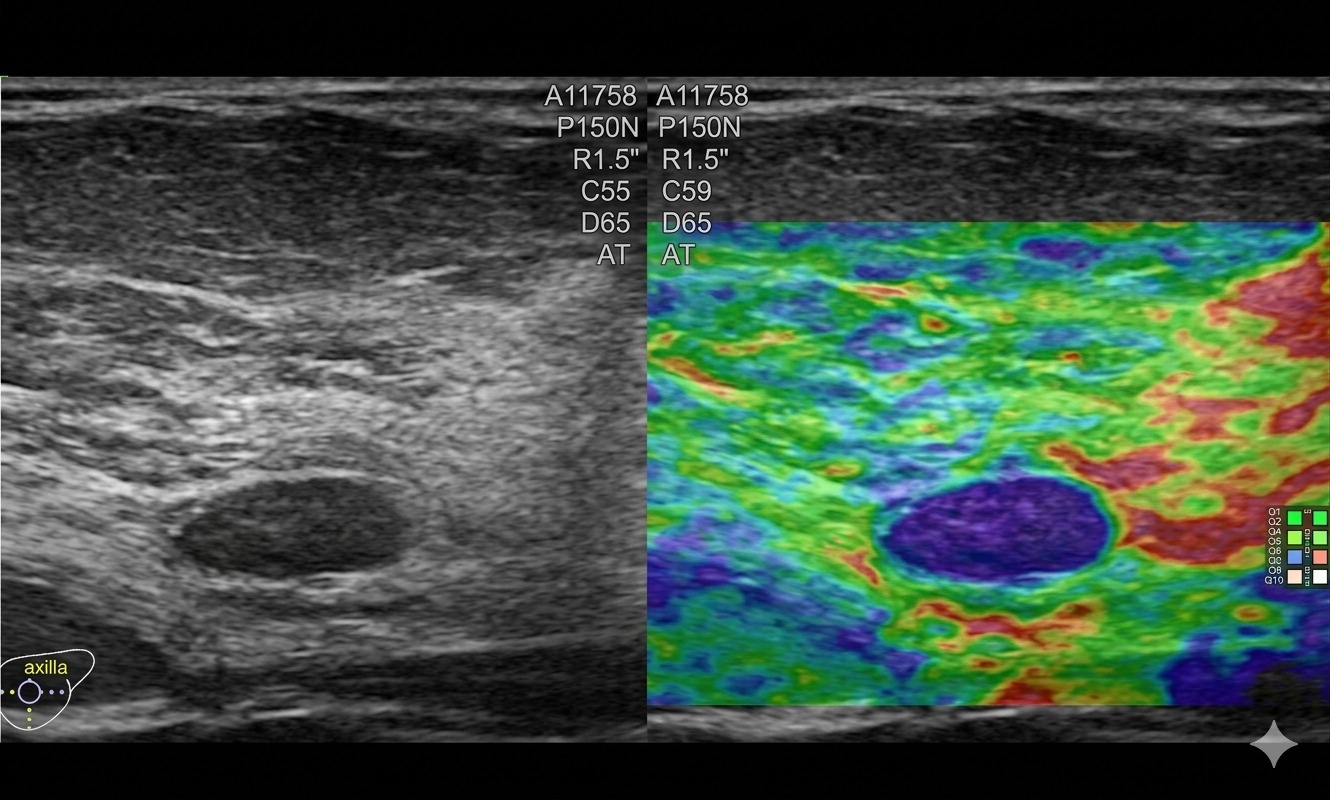
Ultrasound Elastography
Ultrasound Elastography is a non-invasive imaging technique that measures the stiffness or elasticity of tissues in the body. It is commonly used to assess the liver, thyroid, breast, and other soft tissues for signs of disease, particularly fibrosis or cancer.
By detecting changes in tissue stiffness, elastography provides valuable diagnostic information that complements traditional ultrasound, allowing for earlier detection of diseases such as liver cirrhosis or cancerous tumors.
Key Benefits:
- • Non-invasive & Painless – No surgery or needles required; performed like a regular ultrasound.
- • Early Disease Detection – Helps detect conditions like liver fibrosis or tumors at an early stage.
- • Differentiates Tissue Stiffness – Accurately distinguishes between benign and malignant tissues based on stiffness.
- • Real-time Results – Provides immediate imaging and assessment during the procedure.
- •Reduces Need for Biopsy – In many cases, it minimizes or avoids invasive biopsy procedures.
- • Safe & Radiation-free – Uses sound waves, making it safe for repeated use without radiation exposure.


